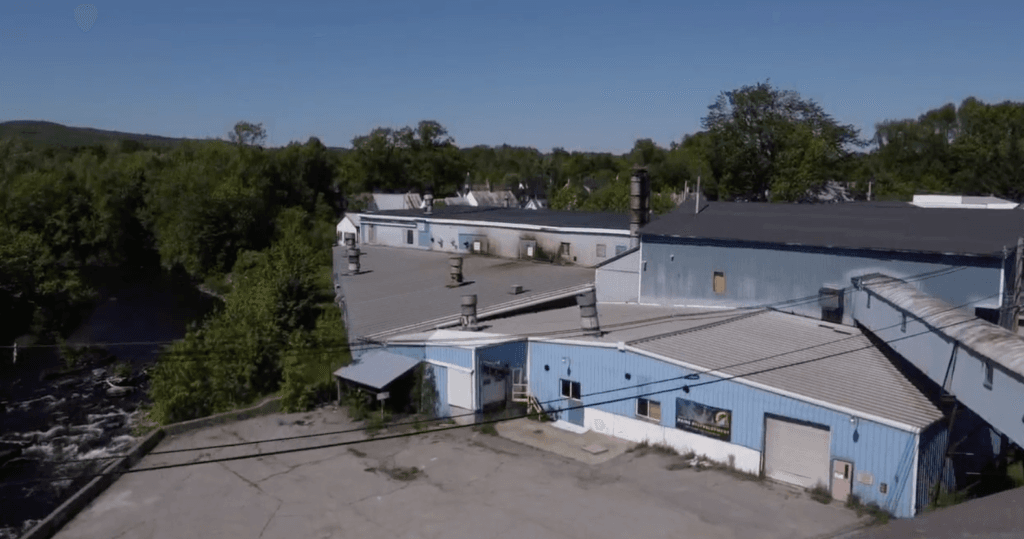
Hartland Former Tannery Updates
FOR IMMEDIATE RELEASE
Maine Redevelopment Launches Community Visioning Series for Former Irving Tannery Site
HARTLAND, Maine — Maine Redevelopment is inviting residents, businesses, community organizations, and regional stakeholders to help chart the future of the former Irving Tannery property through a series of interactive public workshops taking place throughout the summer and early fall.
As Maine’s first land banked property, the former Irving Tannery site represents one of the state’s most significant long-term redevelopment opportunities. The community engagement series is designed to gather local ideas, priorities, and perspectives that will directly inform a comprehensive redevelopment strategy for the site.
Although Maine Redevelopment was disappointed that the project was not selected to receive funding through the U.S. Environmental Protection Agency’s most recent Brownfields Cleanup Grant competition, the organization emphasized that the outcome has not changed its commitment to Hartland or the future of the property.
“Redeveloping sites of this size and complexity has always been a marathon, not a sprint,” said Scott LaFlamme, Executive Director of Maine Redevelopment. “While we were certainly disappointed by the recent funding decision, our commitment to Hartland has never wavered. If anything, this moment provides us with an opportunity to strengthen our redevelopment strategy by listening first ensuring that the future of this property reflects the priorities, aspirations, and long-term vision of the community it serves.”
Each public workshop will focus on a different redevelopment theme:
• Housing and neighborhood development (July 21st 5pm-6:30pm open house)
• Commercial and business opportunities (Aug 4th 5pm-6:30pm open house)
• Recreation, open space, and community amenities (Aug 24th 5pm-6:30pm open house)
The interactive sessions are intended to encourage open dialogue, gather local knowledge, and identify redevelopment concepts that balance economic opportunity with community values. Information collected throughout the series will help guide future planning efforts, strengthen future grant applications, and position the project for long-term investment.
“Maine Redevelopment’s mission is to help communities transform their most challenging properties into productive assets,” LaFlamme said. “The most successful redevelopment projects begin by asking communities what they want their future to look like. That’s exactly what we’re doing in Hartland.”
The outreach effort is being conducted in partnership with the University of Connecticut’s Technical Assistance to Brownfields (TAB) Program and the Kennebec Valley Council of Governments, both of which are providing technical expertise, facilitation, and planning support throughout the community engagement process.
“Maine Redevelopment is incredibly grateful for the continued partnership and enthusiasm shown by Hartland’s municipal leadership, local residents, UConn TAB, and the Kennebec Valley Council of Governments,” LaFlamme added. “Their collaboration is helping build a redevelopment strategy that is grounded in local priorities and positioned for long-term success.”
Additional public workshops will be announced throughout the summer and early fall. All members of the public are encouraged to participate, regardless of whether they have attended previous sessions.
###
About the Maine Redevelopment Land Bank: Maine Redevelopment was established by statute by the State of Maine as a quasi-governmental organization to partner with communities in addressing vacant, abandoned, and complex properties that are often beyond local capacity to resolve. Our mission is to partner with communities to revitalize properties and reimagine their potential for Maine’s future. Through its four core program areas, Municipal Technical Assistance, Brownfields Redevelopment, Land Banking, and Special Projects, the organization delivers the tools, partnerships, and expertise needed to move challenging properties toward productive reuse. This work helps strengthen local economies, restore property value, and support more vibrant and resilient communities across Maine.
Related News and Events

September 10, 2026
October 2026 Maine Redevelopment Board Meeting
Notice is hereby given that Maine Redevelopment will hold a Commissioner’s meeting as defined in MRS Title[..]

August 17, 2026
Latest News
Maine Redevelopment’s Lightning Stabilization Grant Helps Municipalities Address the Challenge of Vacant Schools Augusta, ME – August[..]
