PRESS RELEASE
MEDIA SUMMARY
The Maine Redevelopment Land Bank Authority (Maine Redevelopment) is finalizing the
acquisition of the former Irving Tannery site in Hartland, marking the first property added to the
Land Bank since Maine Redevelopment launched in 2024. The former leather processing
facility, now vacant, has long been central to Hartland’s history and identity and reflects the
industrial legacy shared by many Maine communities. Through a partnership with the Town of
Hartland, Maine Redevelopment will work to stabilize the site, address site conditions, and
prepare it for future reinvestment guided by local priorities. The project represents a milestone
for both the community and the statewide effort to help Maine communities address complex
legacy properties and create conditions for renewed economic opportunity.
FOR IMMEDIATE RELEASE
Hartland, Maine — January 20, 2026 — Leather manufacturing shaped Hartland, Maine, for
nearly 80 years, defining the town’s identity, workforce, and local economy. Market shifts and
the impacts of the COVID-19 pandemic, however, led to the closure of the former leather
operation, leaving behind multiple vacant buildings and properties in the heart of the
community.
For generations, the Irving Tannery stood at the center of Hartland’s economy. It provided steady
jobs, supported families, and reflected the pride and resilience of a town built around industry
and hard work. The long-idle property faces environmental challenges and structural
deterioration that must be addressed before future reuse. Yet for the people of Hartland, it
remains more than an idle site. It is part of the town’s shared history and identity.
In January 2026, the Irving Tannery site will officially become the first property acquired by
Maine Redevelopment. This milestone marks a significant moment for both Hartland and the
statewide Land Bank, putting into action its core mission to help communities address
abandoned, contaminated, or functionally obsolete properties that are too complex for
municipalities to tackle alone.
Through partnerships with municipalities, Maine Redevelopment works to stabilize sites, address
environmental conditions, and create the groundwork needed to attract future investment and
economic reuse aligned with local priorities.
“The Irving Tannery has long been an integral part of Hartland’s history and identity. “Through
this partnership, we have an opportunity to responsibly confront the site’s longstanding
challenges while beginning a thoughtful, community-driven process to prepare the property for
future use, said Christopher Littlefield, town manager of Hartland.
“Our goal is to ensure that any next chapter for this site reflects the values, priorities, and long-term vision of the people of
Hartland.”
The Town of Hartland expressed deep appreciation for its partnership with Maine
Redevelopment. Town leaders noted that this collaboration represents an important step toward
addressing long-standing property challenges and advancing meaningful revitalization efforts.
Through this partnership, the Town looks forward to working cooperatively to clear title issues,
remove unsafe or obsolete structures, and support thoughtful redevelopment in the downtown
area.
These efforts will help position Hartland for renewed economic opportunity while improving
safety, appearance, and long-term community vitality.
State leaders emphasized the importance of locally driven redevelopment supported by statewide
tools.
Rep. Dean Cray of Palmyra said, “Hartland’s tannery site is exactly the kind of property Maine
Redevelopment was designed to help with. This effort respects local history while creating the
conditions for future economic opportunity, and I’m proud to support a model that puts
communities first.”
Maine Redevelopment launched in 2024 to support municipalities facing complex
redevelopment challenges, particularly legacy sites that once fueled local economies and now
require coordinated planning, technical expertise, and long-term vision.
Tuck O’Brien, Executive Director of Maine Redevelopment, said, “Every property holds
potential, even when it feels completely stuck. We partner with communities to clear roadblocks,
to put property back to work, and help them prepare for what comes next. Hartland’s leadership
and commitment to this site reflect exactly the kind of community partnership this organization
was created to support.”
Maine Redevelopment’s board highlighted the broader significance of the Land Bank’s first
acquisition. John Egan, Chair of the Land Bank’s Board of Commissioners, added,
“This first property reflects why the Land Bank was created. When communities have sites that
are too complicated to address alone, we can step in as a partner and help prepare those
properties so they can once again contribute to local economies and long-term prosperity. Our
goal is to remove the barriers that exist to investment and position the site to flourish.”
For many residents, the moment carries personal meaning. Hadley Buker, former Irving Tannery
worker and Hartland resident said, “I worked at the tannery for 40 years, and it was more than a
job, it was a place where people showed up for each other and for this town. Seeing the site
finally being taken care of means a lot. It feels like Hartland’s past is being respected while
making room for something new.”
As planning moves forward, Hartland stands as a model for how Maine can thoughtfully address
legacy industrial sites. The project reflects an approach that honors local history, supports
community decision-making, and creates the conditions needed for renewed economic activity,
jobs, housing, and long-term community resilience.
###
About the Maine Redevelopment Land Bank Authority
Maine Redevelopment stabilizes and rehabilitates abandoned, environmentally hazardous, and
functionally obsolete properties to create economic development opportunities and strengthen
property values. Through partnerships with municipalities, public organizations, counties, and
state agencies, Maine Redevelopment helps foster vibrant, prosperous, and sustainable
communities across Maine. Our mission is to partner with communities to revitalize properties
and reimagine their potential for Maine’s future. We are catalysts for transformation, working
alongside communities to build a more vibrant and resilient future for generations to
come. www.maineredevelopment.org
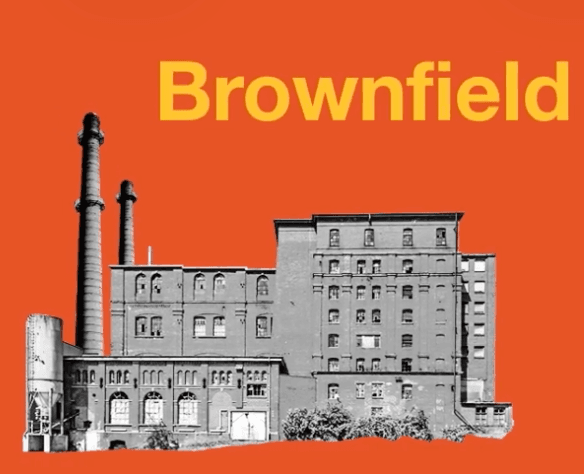
What Is a Brownfield?
A brownfield is a previously developed building or site that is vacant or underutilized due to
environmental contamination from past industrial or commercial use. With appropriate
assessment and cleanup, these sites can be returned to productive use.
Related News and Events

March 1, 2026
March 26, 2026 Maine Redevelopment Board Meeting
Notice is hereby given that Maine Redevelopment will hold a Commissioner’s meeting as defined in MRS Title[..]
January 30, 2026
PRESS RELEASE
Maine Redevelopment Land Bank Awarded National Technical Assistance Scholarship to Advance Statewide Brownfields Strategy Augusta, ME –[..]
